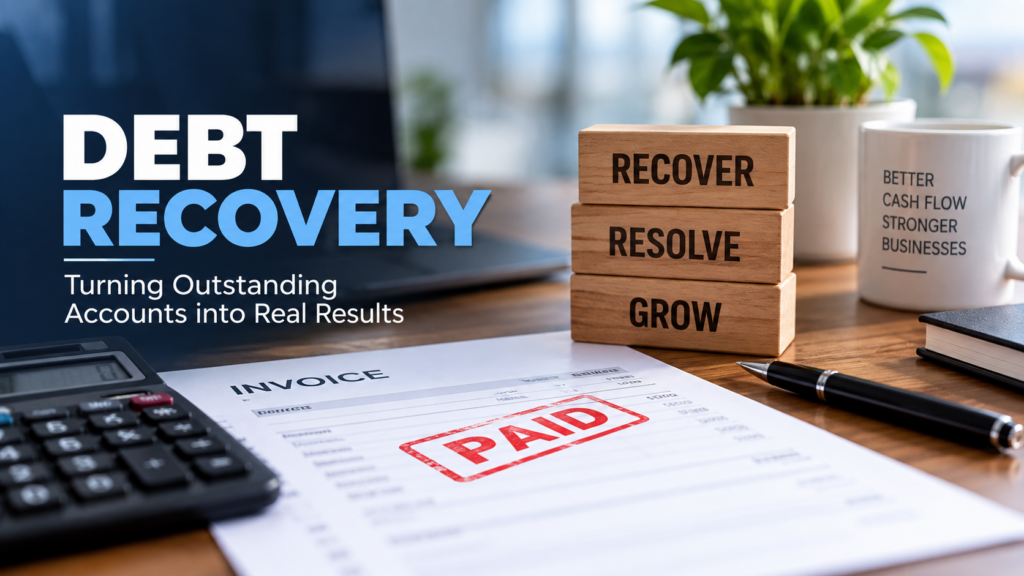
For many businesses and organizations, unpaid invoices and overdue accounts can become a serious financial challenge. When customers, clients, tenants, members, or business partners fail to pay on time, the resulting outstanding debts can affect cash flow, profitability, and the organization’s ability to meet its own financial obligations.
Effective debt recovery is not simply about demanding payment. It requires a structured process that combines proper documentation, professional communication, consistent follow-up, negotiation, account reconciliation, and appropriate escalation.
At Mattan Consulting Limited, we help organizations strengthen their debt collection and recovery processes, improve receivables management, and develop practical strategies for recovering outstanding payments.
What Is Debt Recovery?
Debt recovery is the process of pursuing and recovering money that is legally owed to an individual, business, or organization.
Outstanding debts can arise from unpaid invoices, commercial transactions, service agreements, rental arrangements, membership fees, contractual obligations, or other legitimate financial commitments.
A professional debt recovery process aims to convert outstanding receivables into actual payments while, where possible, preserving the relationship between the creditor and the debtor.
Why Is Debt Recovery Important for Businesses?
Unpaid debts can create problems that go beyond a single outstanding invoice.
1. It Improves Cash Flow
Businesses need consistent cash flow to pay employees, suppliers, rent, taxes, loans, and other operating expenses. Recovering overdue accounts helps organizations access money that has already been earned but has not yet been collected.
2. It Reduces Outstanding Receivables
When overdue accounts continue accumulating, they can create a significant receivables burden. A structured recovery process helps organizations actively manage their debtor portfolio rather than allowing old accounts to remain unresolved.
3. It Protects Profitability
Revenue recorded on paper does not necessarily mean cash has been received. Excessive unpaid debts can reduce the financial resources available to support business operations and growth.
4. It Strengthens Financial Management
A properly managed recovery process gives management greater visibility into outstanding accounts, payment patterns, disputed invoices, and high-risk customers.
5. It Encourages Timely Payments
Consistent and professional follow-up communicates that payment obligations are taken seriously. Over time, this can contribute to better payment discipline among customers and clients.
Common Reasons Why Debts Remain Unpaid
Not every overdue account is the result of a debtor deliberately refusing to pay.
Some common causes include:
- Cash-flow difficulties experienced by the debtor
- Invoices that were never received
- Incorrect or incomplete invoices
- Disputes over goods or services provided
- Unreconciled customer accounts
- Delayed internal approval processes
- Poor follow-up procedures
- Changes in customer contacts
- Broken payment commitments
- Lack of a structured credit-control process
Understanding why a debt remains unpaid is an important part of developing the appropriate recovery strategy.
A Practical Debt Recovery Process
An effective debt recovery process should be systematic rather than reactive.
Step 1: Verify the Debt
Before pursuing recovery, the organization should confirm the amount owed and review the relevant documentation.
This may include invoices, contracts, statements of account, delivery documents, payment records, correspondence, and previous agreements.
The objective is to establish a clear and accurate account of the outstanding obligation.
Step 2: Reconcile the Account
Account reconciliation can identify discrepancies that may be preventing payment.
For example, a debtor may claim that an invoice has already been paid, that a credit note is missing, or that the amount shown on the statement does not match their records.
Resolving such issues can sometimes result in payment without further escalation.
Step 3: Engage the Debtor Professionally
Communication is an important part of debt recovery.
The debtor should be contacted professionally and provided with clear information about the outstanding amount, the relevant account, and the expected payment timeline.
The objective is to establish communication and understand the reason for non-payment.
Step 4: Negotiate Where Appropriate
Some debtors may acknowledge the debt but be unable to settle the full amount immediately.
In such circumstances, a structured payment arrangement may provide a practical solution.
Depending on the circumstances and the creditor’s authorization, this could involve:
- Full settlement by an agreed date
- Instalment payments
- Structured repayment plans
- Negotiated settlements
- Specific payment milestones
Any arrangement should be clearly documented and monitored.
Step 5: Monitor Payment Commitments
A promise to pay is not the same as an actual payment.
Organizations should maintain records of agreed payment dates and follow up when commitments are missed.
Consistent monitoring helps prevent accounts from becoming overdue again after an initial commitment has been made.
Step 6: Escalate When Necessary
Where reasonable recovery efforts have not produced results, further action may be necessary.
The appropriate escalation will depend on the nature of the debt, supporting documentation, the circumstances of the debtor, and applicable laws and procedures.
Where formal legal action is required, organizations should obtain appropriate legal advice and work with qualified legal professionals.
How Businesses Can Improve Debt Recovery
Debt recovery should not begin only after an account becomes seriously overdue. Organizations can reduce future collection problems by strengthening their credit-control systems.
Some practical measures include:
Establish Clear Credit Policies
Businesses should have clear policies covering credit limits, payment terms, customer onboarding, approvals, and follow-up procedures.
Monitor Receivables Regularly
Management should regularly review outstanding accounts and identify debts that are approaching or have exceeded their payment deadlines.
Use Ageing Analysis
An accounts receivable ageing report can help categorize debts according to how long they have remained outstanding.
This makes it easier to identify priority accounts and determine where intervention is required.
Follow Up Early
Early communication can prevent small delays from becoming long-term debts. Customers should receive timely reminders before and after payment deadlines.
Keep Accurate Records
Invoices, statements, contracts, payment records, correspondence, and agreements should be properly maintained.
Accurate documentation makes it easier to understand an account and support recovery efforts when disputes arise.
Separate Genuine Disputes From Non-Payment
A disputed invoice should be investigated rather than treated automatically as a refusal to pay.
Resolving legitimate disputes can remove barriers to payment while maintaining a positive commercial relationship.
When Should a Business Consider Outsourcing Debt Recovery?
Some organizations have limited internal resources to manage large receivables portfolios. Others may have finance teams that are already occupied with accounting, reporting, and other operational responsibilities.
Outsourcing debt recovery or credit-control activities can provide additional capacity for organizations dealing with significant overdue accounts.
A professional external team can assist with debtor engagement, payment follow-ups, account reconciliation, payment negotiations, recovery reporting, and other aspects of the collection process.
This allows internal teams to focus on core operations while maintaining a structured approach to receivables management.
The Importance of Professional Debt Recovery
Effective debt recovery should be firm, consistent, and professional.
Aggressive or poorly managed collection practices can damage customer relationships and create unnecessary disputes. On the other hand, failing to follow up on outstanding accounts can allow debts to grow older and become more difficult to recover.
The objective should be to find the most practical route from outstanding debt to actual payment, while maintaining proper documentation and appropriate communication throughout the process.
How Mattan Consulting Can Help
Mattan Consulting Limited provides professional Debt Collection & Recovery and Outsourced Credit Control services designed to help organizations improve collections, strengthen receivables management, and improve cash flow.
Our approach can include:
- Commercial and corporate debt recovery
- Debtor engagement and follow-up
- Payment negotiation and settlement
- Account reconciliation
- Dispute resolution
- Recovery strategy development
- Receivables monitoring
- Payment commitment tracking
- Collection reporting
- Credit-control support
- Legal recovery coordination where appropriate
Our approach is structured around understanding the account, engaging the debtor, resolving issues, negotiating where appropriate, monitoring commitments, and escalating matters when necessary.
If your organization is struggling with overdue invoices, persistent payment delays, disputed accounts, or a growing receivables portfolio, a structured debt recovery strategy can help you regain control of your cash flow.
Contact Mattan Consulting Limited to discuss your organization’s debt recovery and credit-control needs.


